Website Design for Carpenters
Your work sells itself when someone stands in the room. This makes it do the same before they ever call you - finished joinery shown properly, on a site that loads on a phone in a van and takes an enquiry in one tap.

Three things quietly costing you jobs
Your best work is sitting on your phone
A gallery that keeps earning
Evenings spent quoting jobs you would never take
People sort themselves out before they call
You look smaller than you are
You look like the standard of your work

The same foundation, plus the parts built for joinery
Copy written for you
Structure built on Client-First
Google Analytics 4 already set up
Schema markup for local search
On-page SEO done properly
A guide written for your site
And the parts built for joinery:
- A project gallery you add to from your phone, on site
- An enquiry form that asks for room, timescale and budget up front
- Tap-to-call and WhatsApp on every screen, because you are not at a desk
- Your Checkatrade rating and Google reviews shown together
- Service areas set out so nearby searches find you first
How it works
Four stages, one to four weeks, and you approve three things beforeanything is built.
What pages does a carpenter’s website need?
Fewer than you think, but each one has to earn its place. A focused five to eight page site outperforms a sprawling one every time. Here is the core structure I build for trades clients.
- Says what you do, where you work, and why you are the right choice, with a clear call to action above the fold.
- Services page. Lists your work clearly: fitted furniture, kitchens, decking, commercial joinery, whatever you specialise in.
- Project gallery. Real photographs of finished jobs. This is the single most persuasive page on a carpenter’s site, and it should be managed through a CMS so you can add new work yourself.
- About page. Your experience, your standards, any accreditations like Checkatrade ratings. This builds the trust that turns a browser into a caller.
- Contact page. Phone, a simple enquiry form, and your service area. Make it effortless to reach you.
If you want to rank for specific searches like fitted wardrobes or kitchen fitting in your town, individual service pages for each speciality are worth adding. Each one becomes a page Google can rank for that exact search.
The last carpentry site I built
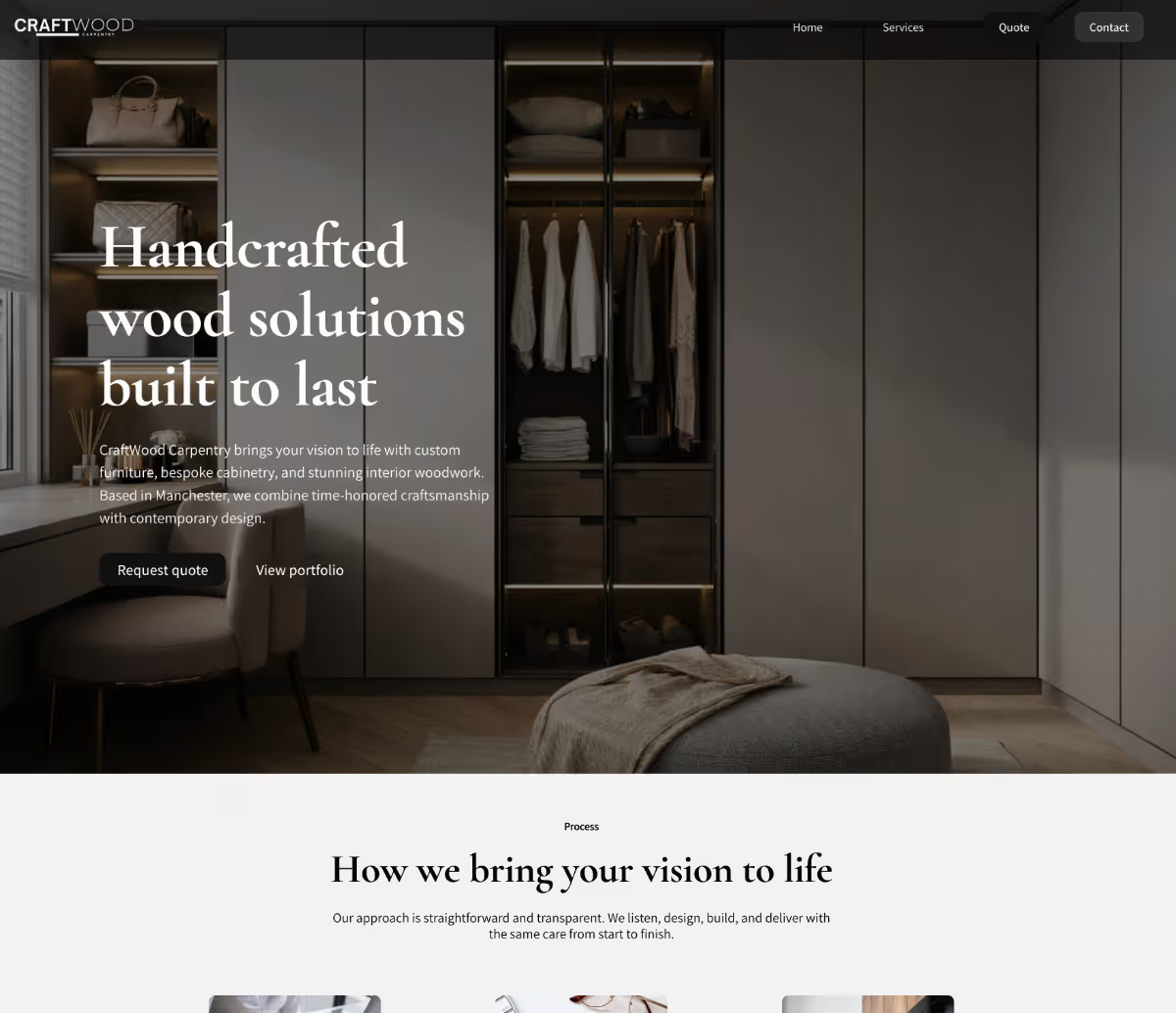
CraftWood Carpentry

Pick a time that works around your jobs
Straight answers
Phone photos are usually fine - daylight, tidy room, straight on. I will tell you which of your existing shots work and what to reshoot before we start. If a flagship job needs proper photography, I will say so rather than build around weak images.
Photos of finished jobs, a rough list of what you take on, and half an hour on a call. I write the words. You correct anything I got wrong about the trade.
Yes, and that is usually the best time. Most builds run one to four weeks, so a winter start means the site is working before spring enquiries begin.
It stays and it keeps working. The site pulls your rating in and sends people to it. The two feed each other rather than compete.
It depends what it does. If it loads slowly, cannot show a gallery properly, or you cannot edit it, it is costing you jobs quietly. Send me the link and I will tell you honestly whether it is worth rebuilding.
No. I am based in Worthing, so local jobs can be done face to face, but the work happens over calls and most clients are elsewhere in the UK.
Most carpentry sites I build start at £1,700, with a fixed price agreed before any work begins. That covers the pages, a project gallery you can add to yourself, and the setup for local search. A bigger site with a page for each service costs a little more, and you'll know exactly how much before we start.
Usually five to eight: a homepage, your services, a project gallery, an about page and a contact page with your service area. If you want to be found for one type of job, such as fitted wardrobes or staircases, give it its own page. Each one can then show up for that search in your town.
Two things work together: the website and your Google Business Profile. On the site, name the towns you cover and the jobs you do in plain words, and use real photos of finished work. Then fill in your Business Profile completely and keep your name, address and phone number the same everywhere they appear.
What clients say
.png)